
NEWS
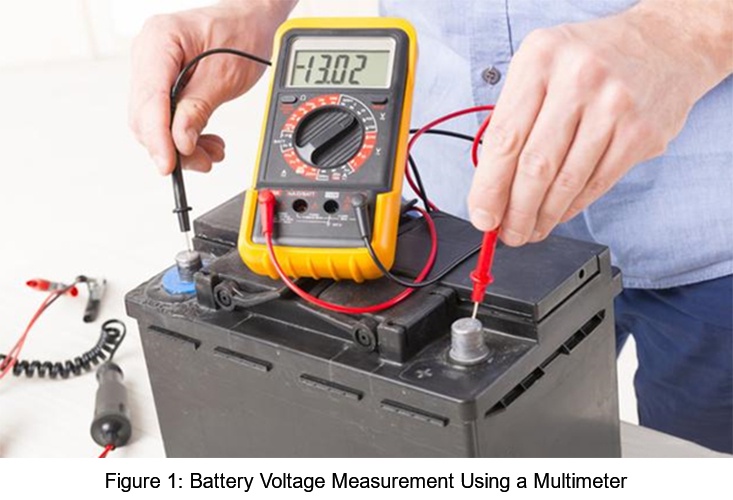
I. Common Causes of Falsely High Voltage Readings
Diesel generator starter batteries possess a specific physical characteristic: as long as any electrical energy remains within the battery, the battery itself tends to attempt to maintain its nominal voltage—its rated physical voltage—until its energy is completely depleted. When the battery's discharge cycle is nearly complete (meaning its electrical energy is almost exhausted), a minuscule amount of residual energy may still remain. At this stage, if the battery is removed from its operational environment (i.e., disconnected from the circuit), its voltage will slowly recover toward its nominal value. However, this figure represents a theoretical value; in actual practice, the measured voltage will likely be somewhat lower. Crucially, the voltage reading—which appears close to the nominal value at this point—does *not* indicate the presence of usable electrical energy! When you reconnect the battery to the diesel generator's starting system, because the battery has already discharged and lacks sufficient energy reserves, its working voltage will immediately plummet to a minimum level, rendering it incapable of functioning normally. This phenomenon is commonly referred to as the "false voltage" effect.
1. Plate Sulfation
Prolonged operation in a discharged state or improper storage conditions can lead to the formation of lead sulfate crystals (sulfation) on the surface of the battery plates, resulting in increased internal resistance. Consequently, the voltage rises rapidly during charging, yet the actual storage capacity decreases; conversely, the voltage drops precipitously during discharge.
2. Charging System Anomalies
(1) Excessive charging voltage (e.g., due to a regulator malfunction) causes the battery to overcharge, effectively forcing the voltage reading to an artificially high level.
(2) Uncontrolled charging equipment (e.g., a defective battery charger or a malfunctioning solar charge controller).
3. Electrolyte-Related Issues
(1) Excessive electrolyte concentration (resulting from the over-addition of sulfuric acid) can disrupt normal chemical reactions, leading to a falsely high voltage reading.
(2) A low electrolyte level exposes the battery plates to the air, causing them to oxidize and triggering localized sulfation.
4. Battery Aging or Internal Short Circuits
(1) As a battery ages, its internal resistance increases; while the voltage may rise quickly during charging, the battery is unable to retain the charge effectively.
(2) A minor internal short circuit can cause the voltage of specific individual cells to become anomalous, resulting in overall voltage instability.
5. Temperature Effects
In high-temperature environments, the rate of internal chemical reactions within the battery accelerates, which may lead to a transient, temporary rise in voltage. II. Inspection Methods
1. Static Voltage Test
Disconnect all loads and allow the battery to rest for at least 2 hours; then, use a multimeter to measure the open-circuit voltage. Set the multimeter to the DC voltage range, connect the red probe to the positive terminal and the black probe to the negative terminal to measure the DC voltage. By comparing the measured value against standard references, one can identify instances of "false voltage" (artificially inflated readings).
(1) Normal Range (using a 12V lead-acid battery as an example): 12.6–12.8V when fully charged.
(2) Signs of False High Voltage: The resting voltage exceeds 13V (potentially indicating sulfation or overcharging).
2. Charging Voltage Test
Connect the charger and measure the voltage while the battery is in the charging state.
(1) Normal Range: 13.8–14.8V for lead-acid batteries (approximately 13.6V during the float charge stage).
(2) If the charging voltage consistently exceeds 15V, it indicates an abnormality in the charging system.
3. Electrolyte Inspection
(1) Specific Gravity Test: Use a hydrometer to measure the density of the electrolyte.
Normal Value (when fully charged): 1.24–1.28 (at 25°C). If the density is too high (>1.30), dilution is required; if it is too low (<1.20), sulfation may be present.
(2) Fluid Level Check: The electrolyte level should be 10–15mm above the top of the battery plates; if the level is low, add distilled water (do *not* add sulfuric acid).
4. Load Test
Connect a load (e.g., a 50W light bulb for a 12V battery) and observe the voltage fluctuation:
(1) Normal Battery: The voltage drops gradually (e.g., from 12.6V to 12.2V).
(2) Battery with False High Voltage: The voltage drops rapidly (e.g., from 12.8V to below 11V).
5. Internal Resistance Test
Use a dedicated battery internal resistance tester to perform the measurement; for aged or sulfated batteries, the internal resistance will be significantly elevated (e.g., >20mΩ for a 12V battery). 6. Charging System Troubleshooting
Inspect the voltage regulator and rectifier of the diesel generator set or charging equipment to determine if they are faulty, and ensure that the charging voltage meets standard specifications.
7. Battery Inspection (Professional Procedure)
Remove the battery cover and visually inspect the plates for sulfation (characterized by white crystalline deposits on the surface), check the separators for damage, and observe whether the electrolyte appears cloudy.
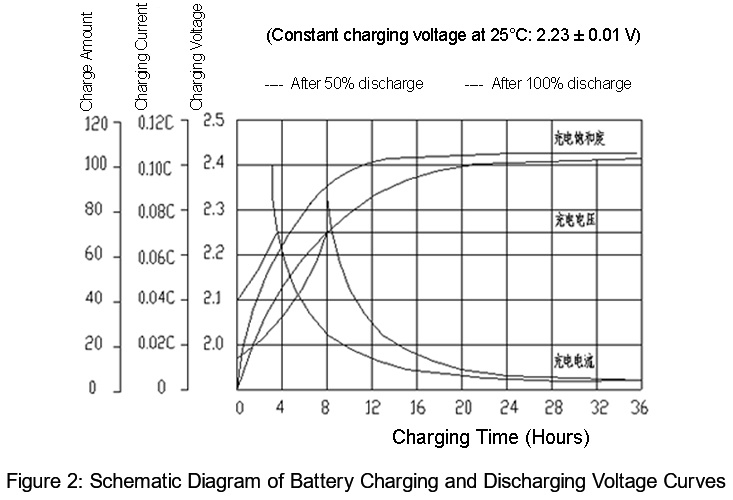
III. Repair Case Study
1. Fault Symptoms
A Cummins B-series diesel generator, which had previously operated without any issues, suddenly exhibited difficulty starting one morning. However, once started, the generator ran normally. Upon a subsequent attempt to start the unit, it suddenly failed to start completely; there were no signs of ignition whatsoever, and the starter motor did not rotate.
2. Fault Diagnosis and Analysis
The first step was to check whether the battery charge was sufficient. Using a handheld digital multimeter, the maintenance personnel measured the voltage and found it to be 25V, which falls within the normal operating range. Suspecting a fault in either the starter motor or the starting circuit, they proceeded to inspect the circuit. The inspection revealed no faults in the wiring. Next, they attempted to bypass the control circuit by short-circuiting the two main terminals of the starter motor; however, the starter motor still showed no signs of engaging. Consequently, they concluded with certainty that the starter motor itself was at fault. Yet, upon disassembling and inspecting the starter motor, they discovered that it was in perfect working order. The maintenance personnel then reconsidered the possibility of insufficient battery charge and used a dedicated battery tester to verify this. The instrument indicated that the battery charge was, in fact, severely depleted.
This particular diesel generator had been in service for a relatively short period but had undergone a high frequency of starting cycles. As a result, the battery had been operating in a chronically undercharged state, leading to damage to its internal plates. When a single battery unit is undercharged, its open-circuit voltage may still register around 12V; the voltage drops sharply only when it is placed under load (i.e., during discharge). Therefore, when using a multimeter to check battery voltage, it is essential to perform a dynamic test (under load) or to utilize specialized instruments—such as a high-rate discharge tester or a dedicated battery analyzer—to avoid being misled by the deceptive readings of "surface voltage."
3. Fault Resolution
After replacing the battery, the fault was resolved, and the diesel generator resumed normal operation. The following precautions should be observed regarding the issue of "surface voltage" (false charge readings) in batteries:
(1) Once a battery has been fully charged, it should not be left idle for extended periods. For batteries that have already been put into service, it is recommended to perform a full charge-discharge cycle (i.e., use the battery) at least once every one to two months. (2) Batteries should not be stored without recharging after their power has been fully depleted; the minimum voltage threshold for each individual cell is 1.0V. Allowing the voltage to drop below this level—or storing the battery in a completely discharged state for an extended period—will render it unchargeable and unusable.
(3) Batteries should not be subjected to excessively long charging cycles; prolonged charging will cause the battery's chemical activity to degrade rapidly.
(4) After prolonged use or due to improper maintenance, the battery's metal contact terminals may exhibit signs of oxidation; it is recommended to wipe these contacts clean prior to use.
(5) The improper charging methods employed by substandard or counterfeit chargers can significantly shorten the battery's service life.
NANBOWAN
Professional generator set manufacturer
24/7 before-sales and after-sales services
Comprehensive technical support